Tides of Terror: A Visual Investigation into Shark Attacks Worldwide
In the vast expanses of the world's oceans, where waves dance with grace and sun-kissed shores beckon, an ancient predator silently prowls beneath the surface. 'Tides of Terror: A Visual Investigation into Shark Attacks Worldwide' embarks on an extraordinary odyssey, peeling back the layers of mystery shrouding these enigmatic encounters. Through a profound dive into the ocean of data, we reveal intricate patterns that illuminate the nuanced dynamics between sharks and humans. This investigative endeavor transcends sensationalized tales, immersing itself in the currents of data. Employing meticulously crafted charts and graphs, our mission is to illuminate the evolving tapestry of shark attacks across the globe. Spanning from the early 20th century to the present day, our exploration encompasses not only the frequency of these encounters but also their geographic distribution, the activities that trigger them, and the sobering reality of fatal incidents. As we navigate the depths of data, you'll witness the ebb and flow of shark attacks over the years, gaining a profound understanding of the hotspots where these encounters unfold. 'Tides of Terror' promises more than a mere visual exploration; it pledges a comprehensive journey into the intricate and evolving relationship between humans and sharks.

The line chart vividly illustrates the ebbs and flows of shark attacks over the past century. Notably, a surge in incidents during the 1960s coincides with increased shark exploitation—bycatch during commercial fishing spiked. Conversely, the decline in the 1980s can be attributed to overfishing, habitat destruction, and the negative impact of shark finning. Media and cultural influences are apparent; the release of Jaws in the 1970s fueled a negative perception, resulting in heightened media attention, shark tournaments, and indiscriminate killing. The apparent drop in number of attacks in the 1970's and 1980's is in part reflective of the largely inactive state of the ISAF during those decades.
Surfing and swimming emerge as the primary triggers for shark attacks, a phenomenon driven by the shark's investigative bites rather than predatory intent. The splashing and seal-like silhouettes of swimmers, combined with the stirred sand in shallow waters, make them inadvertent targets. In contrast, diving activities exhibit a lower incidence due to improved visibility, unnatural human appearance, and the tendency to travel in groups. Even in situations where divers intentionally engage with sharks, bites remain exceedingly rare, highlighting the nuanced dynamics between human activities and shark interactions.
The Big Three: Sharks Behind the Stats
The Big Three: Sharks Behind the Stats White, tiger, and bull sharks, collectively known as the "Big Three," dominate shark attack statistics. Their large size, common presence in areas frequented by humans, and teeth designed for shearing contribute to their prominence.

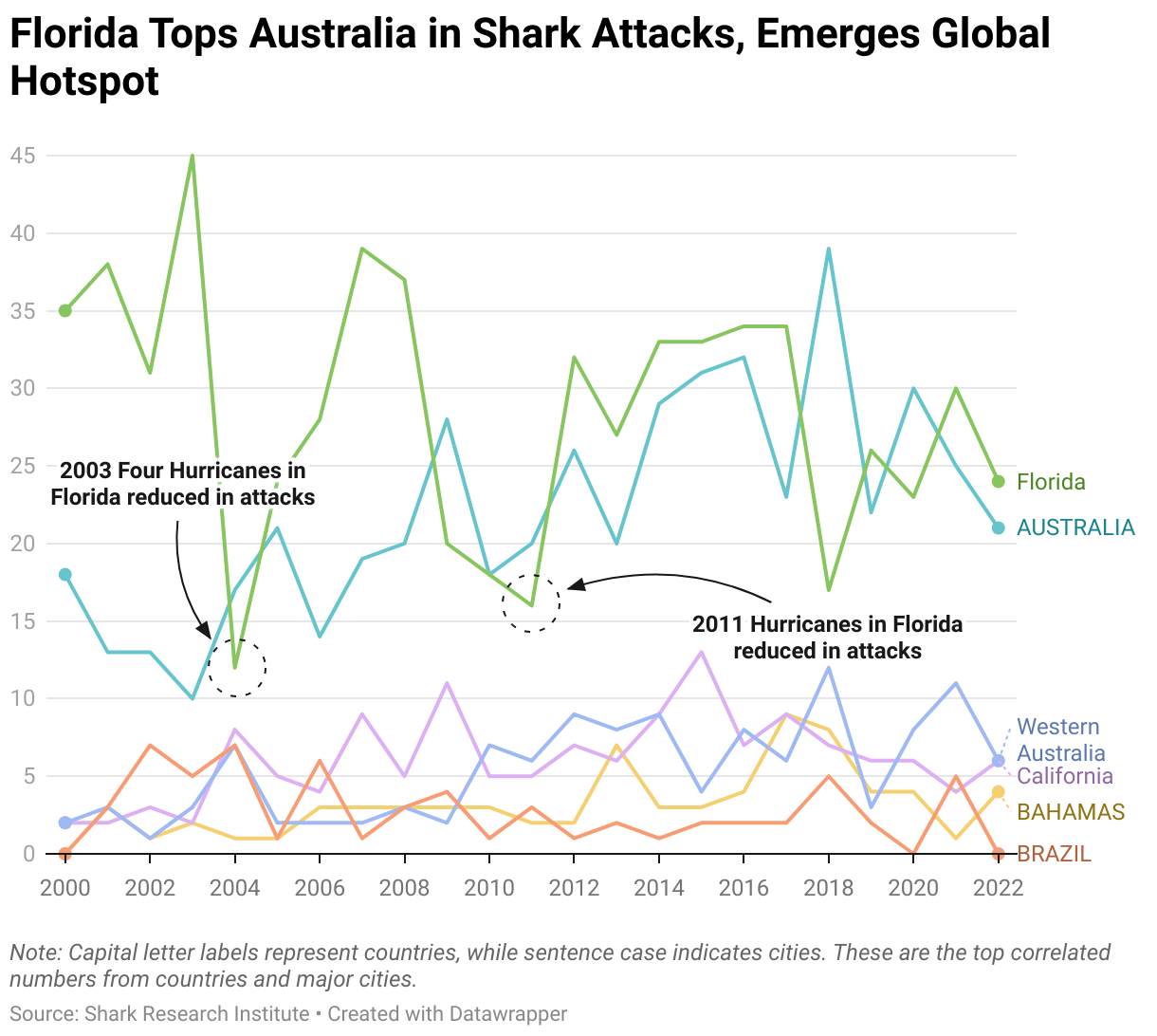
Analyzing the map chart, a stark concentration of shark attacks emerges, with the United States, and particularly Florida, standing out as a hotspot. Often dubbed the "shark bite capital of the world," Volusia County consistently records high numbers of shark attacks, contributing significantly to the overall statistics. The line chart further underscores the significance of this trend. Florida, at times, surpasses even Australia in the frequency of shark attacks during certain years. Notably, a dip in shark attacks coincides with years marked by hurricanes. This intriguing correlation suggests a potential link between reduced shark attacks and fluctuations in tourist activity, highlighting the role of tourism in influencing the frequency of shark-human encounters. These insights underscore the complex interplay of geographical factors, local ecosystems, and human behaviors in shaping the patterns of shark attacks worldwide.
Author's Reflection
Embarking on the journey through shark attack data, the narrative unfolds as a tapestry woven with the intricate threads of human influence. From the surge in the 1960s fueled by exploitation to the 1980s decline amidst overfishing, the data reveals a story shaped by our actions. Media, epitomized by Jaws, adds layers of complexity, and the apparent lull during the 1970s-1980s connects to the inactive state of the International Shark Attack File (ISAF). Surfing and swimming emerge as protagonists in the encounters, where the inquisitive nature of sharks takes center stage. "The Big Three" sharks—white, tiger, and bull—cast a formidable shadow, but recent data introduces nuances, spotlighting a majority of non-fatal incidents and a steady rise in yearly averages. The chart zooms on Florida, casting it as the "shark bite capital" with a story that mirrors tourism trends. The fluctuation in Florida's statistics during hurricane years adds a dynamic layer to our understanding. In this dance between humans and sharks, the data serves as my guide, leading to a profound reflection on our complex relationship with these marine wonders.
Note: The data presented relies on surveys and incident reports, acknowledging potential reporting bias. Shark attacks, often occurring in remote areas, may result in underreporting. Readers are encouraged to interpret the information with awareness of these limitations.